
PHS School Thinking...
The rise of the small school movement was not an accident. It was the result of a long struggle against over-centralization and excessive standardization in education. Below is a detailed look at the evolution of this model in the US, Europe, and Japan.
The foundation of small schools began with John Dewey’s early 20th-century philosophy of “the school as a social center.” Dewey argued that education must be connected to community life and serve as a space for practicing democracy. However, in the following decades, the boom of “comprehensive schools” pushed education toward a mass-production model.
It was not until the 1970s, when large urban school systems in the US faced a decline in quality and safety, that educators returned to the idea of smaller environments. District 4 in East Harlem, New York, led by Anthony Alvarado and Deborah Meier, became the “cradle” of the modern movement.
In 1974, Central Park East (CPE) was founded on the belief that small size is a prerequisite for academic rigor and social equity. Meier proved that even the most disadvantaged students could achieve great success in an environment where everyone knows each other’s names.
Example in the US: Following CPE’s success, High Tech High in California advanced the model by combining small class sizes with Project-Based Learning (PBL). Instead of large lecture halls, students work in small studios where teachers act as close mentors for every individual.
In Europe, the small school model is more than a solution for school safety; it is a way to preserve cultural identity and personalize learning paths.
In the UK: The Human Scale Education (HSE) movement encouraged breaking down massive secondary schools into “mini-schools” or “houses.”
Example in UK: Bishop Young CE Academy adopted a “school-within-a-school” structure. This helped reduce bullying and increase the number of high-achieving students by creating close-knit communities where each student is cared for academically and emotionally by a dedicated lead teacher.
In Northern Europe (Finland, Denmark): The small school philosophy is almost the default. Schools often have fewer than 300 students. This ensures teachers understand each child’s family background and unique abilities, allowing them to design appropriate assessments instead of high-pressure standardized exams.
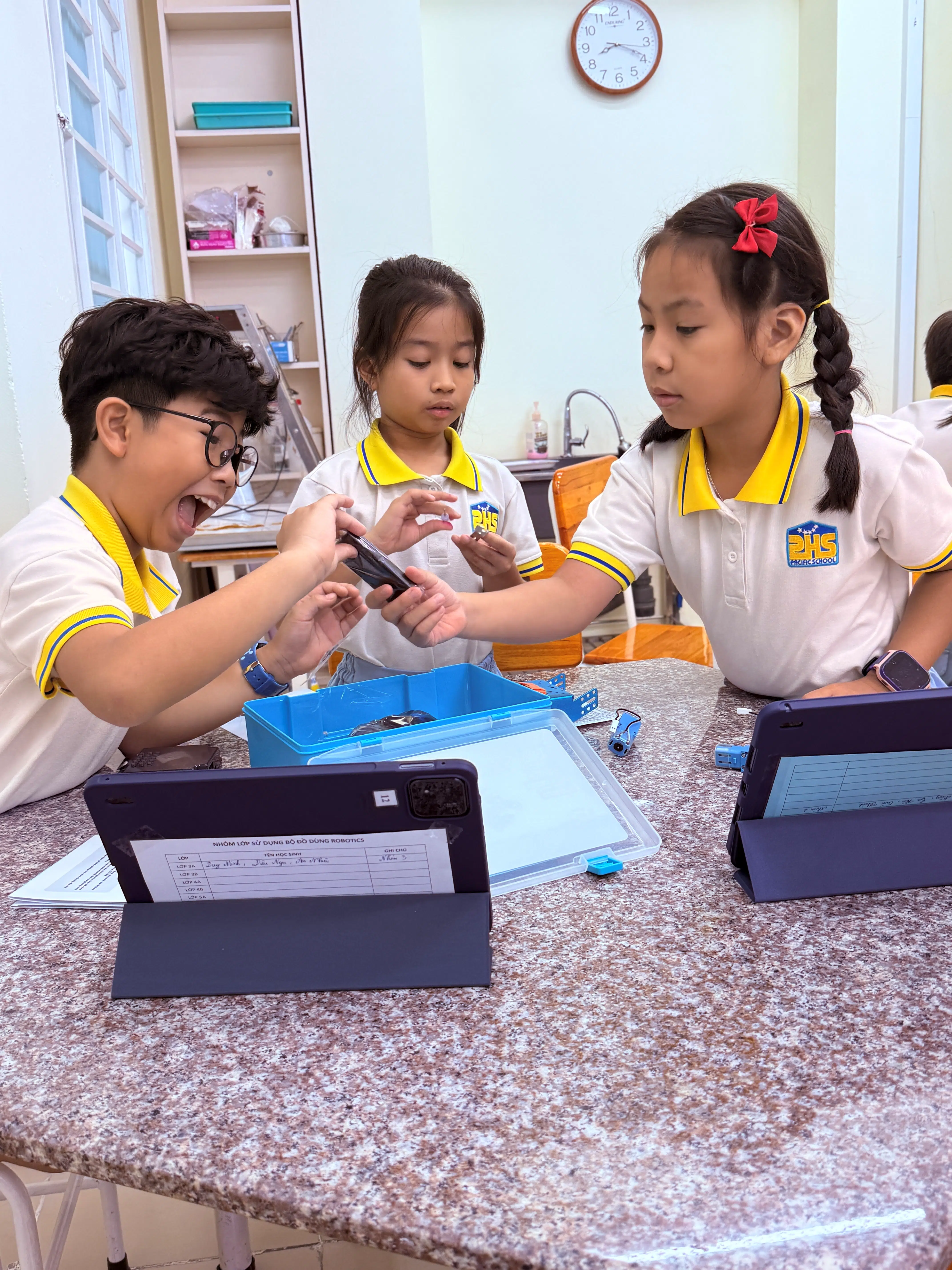
Japan faces a different challenge: an aging population and the need to shift from exam pressure to social skill development.
Example in Japan: The “Community School” (Kyōdu) and “Special Small-Scale School” (Tokurei Shōkibo Kō) models.
In regions like Shimane or Hokkaido, instead of closing schools with few students, the government allows them to operate at a very small scale (sometimes only 5-10 students per class). Education here moves away from rote learning toward group discussions and field experiences. This small scale helps students develop deep communication skills, which are often lost in large urban “cram schools.”
In the 21st century, the small school movement grew from a local experiment into a national reform strategy. Between 2000 and 2008, the Bill & Melinda Gates Foundation invested over $1.5 billion to support thousands of small schools across the US. The federal government also joined through initiatives like “Small Learning Communities.”
While debates over operational costs exist, global data consistently proves one thing: as school size decreases, educational equity and quality significantly increase.
At PHS, we fully recognize that maintaining a small school model requires a higher investment per student. However, the school is deeply committed to pursuing this structure to ensure the maximum benefits for our students and the highest quality of education for future generations.
#TruongHocNho #GiaoDucCaNhanHoa #HieuTungHocSinh #TuongLaiBenVung #PHS2026 #SmallSchools #PersonalizedLearning #HumanScaleEducation #EducationalEquity #StudySmart

Pacific Primary, Middle, and High School is a Vietnamese-English bilingual institution structured according to international standards. We are dedicated to fostering core competencies, enabling students to integrate seamlessly into the global education landscape while achieving their full personal potential.